
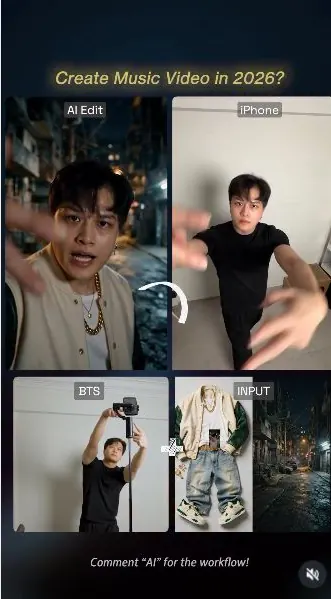
 Watch the original videoInstagram (opens in a new tab)
What you'll make
Create location and outfit references, then apply them to your filmed performance.
Who this is for
Creators making videos with their own reference assets.
Step by step
Run the workflow
- 01
Record your performance
Film the rap performance you want to keep.
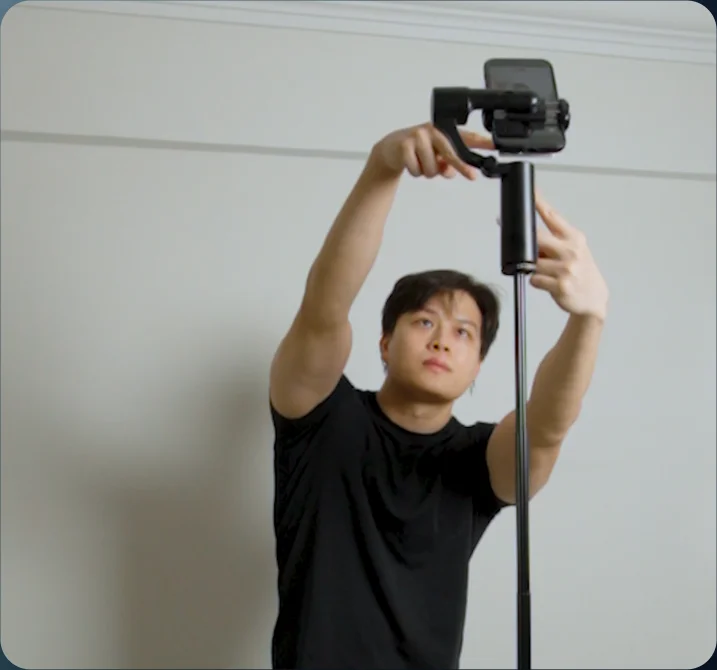
Source tutorial, page 4 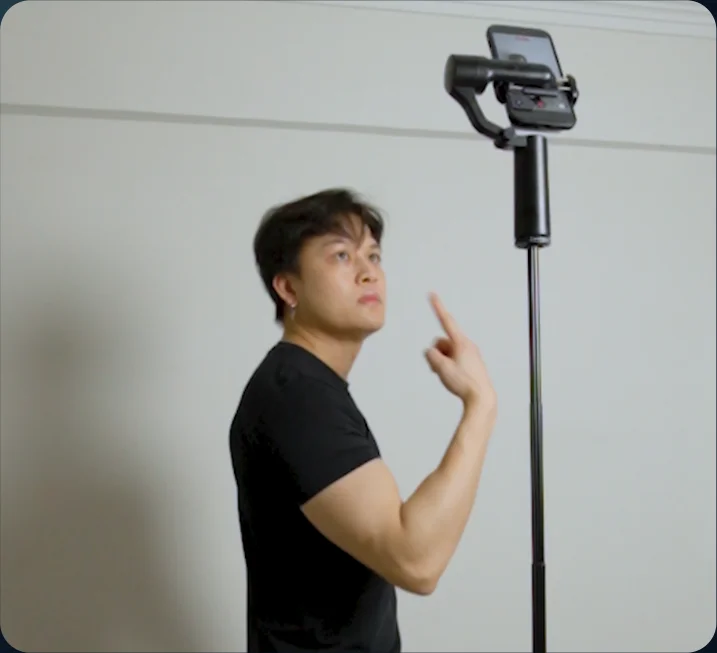
Source tutorial, page 4 - 02
Open the image generator
Open Image in Higgsfield and select Seedream 5 Pro.
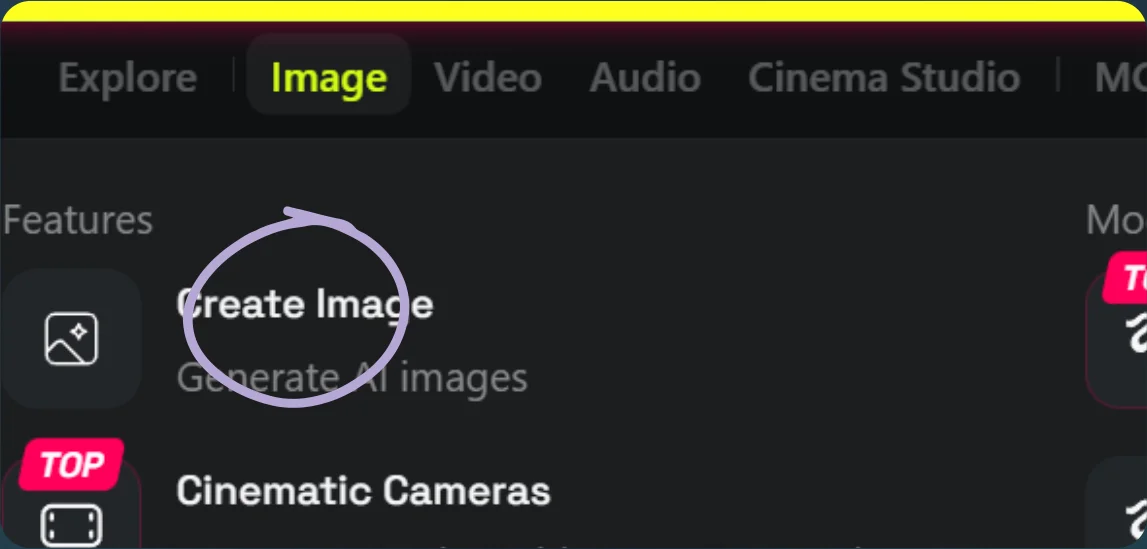
Open Create Image 
Select Seedream 5 Pro - 03
Create five locations
Use the five location prompts separately with your reference image.
Show copyable prompt
Image prompt 1 A photorealistic cinematic rap music video location in a rough inner-city neighborhood at night, vertical 9:16 composition. A narrow residential street surrounded by aging apartment blocks, concrete walkways, metal railings, chain-link fences, cracked pavement, parked older sedans and SUVs, utility poles, exposed wiring, dumpsters, worn storefront shutters, graffiti-covered walls, and scattered street clutter. Everything should feel lived-in, imperfect, and real. The lighting is dark and moody, coming from flickering street lamps, fluorescent convenience-store lights, headlights, distant apartment windows, and subtle red and blue neon spill from nearby signs. Wet pavement catches reflections from the surrounding lights, adding cinematic depth without making the scene look overly polished. Light atmospheric haze in the distance, subtle exhaust smoke near parked cars, deep shadows between buildings, strong contrast, realistic grime and texture on concrete and metal surfaces. The environment should feel raw, tense, energetic, and authentic, like a high-budget modern rap music video filmed on a real city block late at night. Avoid exaggerated movie-set styling. Keep the architecture, lighting, vehicles, and street details believable. Wide cinematic framing, slightly low camera angle, deep perspective down the street, handheld documentary energy, realistic lens characteristics, natural depth of field, high dynamic range, realistic skin-free environment, photorealistic textures, cinematic color grading, no people, no text, no logos, no fantasy elements. 9:16 vertical frame.Image prompt 2 A real-life cinematic rap music video still inside a dirty, run-down apartment living room, vertical 9:16. The image must look like an actual photograph shot on a cinema camera, not digital art, not illustration, not CGI, not cartoon, not stylized concept art. An old worn-out sofa is the main focal point, with faded fabric, stains, sagging cushions, torn seams, and mismatched pillows. The exact middle seat of the sofa is completely empty and clearly reserved for the main character. Leave enough space for one adult male to sit naturally in the center later. Surrounding the empty seat are exactly six young adults with clearly different ethnic appearances: 1 East Asian man 1 East Asian woman 1 Black man 1 White woman 1 South Asian man 1 Latino or mixed-race woman Make every person visibly distinct in facial features, skin tone, hairstyle, body type, and styling. Do not make the group predominantly one ethnicity. Arrange them naturally around the sofa. Two seated beside the empty center position, two around the armrests, and two standing casually behind the sofa. They wear modern streetwear with individual styling: oversized hoodies, vintage leather jackets, varsity jackets, baggy denim, cargo pants, fitted caps, beanies, sneakers, silver chains, rings, watches, and subtle luxury streetwear details. Avoid matching outfits. Avoid exaggerated gangster costumes. Everyone looks directly into the camera with calm, confident, slightly intimidating expressions. Natural posture, relaxed body language, subtle imperfections, candid realism. The apartment is cramped, dirty, and genuinely lived-in: peeling paint, cracked plaster, exposed pipes, stained carpet, scratched furniture, cheap blinds, loose cables, takeaway containers, cups, old magazines, worn walls, and miscellaneous clutter. Lighting should look physically real and practical. One harsh overhead ceiling light above the sofa, weak table lamps, and dim street light entering through the blinds. Deep natural shadows around the edges of the room, realistic falloff, subtle atmospheric haze, and small highlights catching jewelry. Shot like a real high-budget rap music video using an ARRI Alexa or Sony Venice cinema camera, 28mm lens, realistic depth of field, realistic skin pores, natural facial texture, slight film grain, natural lens distortion, realistic fabric texture, realistic wall grime, realistic exposure, cinematic dynamic range. Exactly six people total. Mixed ethnic group. Empty center seat clearly visible. Real-life photography. 9:16 vertical frame.Image prompt 3 A photorealistic cinematic rap music video scene on top of a moving urban train at night, vertical 9:16 composition. No people anywhere in the image. Camera placed low on the roof of the train, looking forward along the carriages. The train roof fills the lower half of the frame with realistic metal seams, vents, bolts, scratches, grime, weathering, and subtle reflections. Keep a large clear empty area in the center foreground of the train roof, intentionally framed so a main character can be added later in a low squatting pose. The train moves through a dense gritty city environment with aging apartment blocks, industrial buildings, elevated structures, utility poles, overhead cables, concrete walls, graffiti, distant traffic lights, and scattered illuminated windows. Nighttime lighting with strong cinematic contrast. Cold industrial white lights, sodium streetlights, occasional red and blue urban light spill, distant headlights, and reflections sliding across the metal roof. Add subtle atmospheric haze, light mist, and realistic motion blur in the distant environment while keeping the train roof relatively sharp. The scene should feel raw, dangerous, urban, and believable, like a real high-budget rap music video shot practically on location. Real-life photography, realistic train scale, realistic architecture, physically accurate metal textures, natural exposure, subtle film grain, authentic lens characteristics, deep shadows, cinematic dynamic range, slight handheld energy. Shot on a cinema camera, wide-angle lens, low perspective, strong leading lines toward the horizon, immersive framing. No people. No characters. No text. No logos. No CGI look. No illustration. No cartoon style. No fantasy elements. Photorealistic real-life cinematic photography. 9:16 vertical frame.Image prompt 4 A photorealistic cinematic rap music video scene inside a crowded, gritty urban train carriage at night, vertical 9:16. No main character in the image. Leave a natural open pocket of space in the foreground, slightly off-center, where the main character can be added later. The train is packed with around 12 to 15 stylish young adults with strong underground streetwear energy. The crowd must be visibly ethnically diverse and balanced: around 4 East Asian or Southeast Asian people around 3 White people around 2 South Asian people around 2 Latino or mixed-race people around 1 Black person around 1 Middle Eastern person Do not make the crowd predominantly Black. Do not repeat the same ethnicity or facial features across the group. Every person should have clearly different facial structures, skin tones, hairstyles, and clothing. The crowd feels natural and unposed. Some people are sitting on worn train seats. Some are standing in the aisle. Some are holding overhead straps. Some are gripping metal poles. Some lean against the doors. Some are partially blocked by other passengers. Some are deeper in the carriage. Most people are casually doing their own thing, but several subtly notice the camera and give restrained side-eye, cold glances, or slightly suspicious looks toward the lens. Do not make everyone stare directly at the camera. Expressions are calm, serious, detached, cool, and confident. Slightly lowered heads, sideways glances, relaxed posture, hands in pockets, crossed arms, leaning casually against poles. Modern streetwear styling: oversized hoodies, dark puffer jackets, leather jackets, varsity jackets, baggy denim, cargo pants, fitted caps, beanies, sneakers, silver chains, rings, watches, and understated luxury streetwear pieces. The train is old, dirty, and heavily worn: scratched metal poles, faded seats, scuffed floors, stained walls, graffiti, stickers, torn advertisements, dirty windows, fingerprints, grime, and flickering fluorescent ceiling lights. Lighting is dark, realistic, and cinematic. Weak cold fluorescent lights overhead create uneven pools of light across the crowd. Large areas fall into deep shadow. Dim red, orange, and blue city light passes through the windows as the train moves. Camera is positioned slightly off-center near one side of the carriage, looking diagonally through the crowd rather than straight down the middle. Wide cinematic lens, layered foreground and background, passengers partially entering the edge of frame, natural crowd density, realistic depth, slight handheld imperfection. Feels like a real spontaneous frame from a high-budget underground rap music video filmed inside a late-night city train. Real-life cinema photography. Photorealistic faces. Natural skin texture and pores. Natural facial imperfections. Realistic fabric textures. Realistic lighting. Slight film grain. Natural depth of field. Subtle motion blur outside the windows. No main character. No selfie pose.Image prompt 5 A photorealistic cinematic rap music video scene inside a gritty bank vault, vertical 9:16 composition. The scene takes place inside a real-looking bank vault room with heavy steel walls, open vault doors, rows of safety deposit boxes, metal shelves, scattered lockboxes, and a cold industrial atmosphere. The environment should feel raw, dark, high-stakes, and luxurious at the same time. Cash and jewelry are scattered across the floor and nearby surfaces: bundles of banknotes, loose stacks of cash, diamond chains, watches, rings, bracelets, pendants, and open cases spilling valuables. The money and jewelry should feel messy and naturally spread out, not neatly arranged. Include a small group of robbers crouching down and moving naturally as they handle the cash and jewelry, sorting through items, stuffing bags, checking pieces, and focused on what they are doing. Their poses should feel candid and believable, like they are caught mid-action. Some are squatting low, some kneeling, some leaning forward over the scattered valuables. Wardrobe should feel like a gritty modern rap-video robbery scene: dark hoodies, puffer jackets, cargos, gloves, masks or face coverings, sneakers, and streetwear styling. Keep them intimidating and realistic, not theatrical or costume-like. Camera angle is slightly top-down, as if shot from a raised position inside the vault, looking down at the robbers and the spread of cash and jewelry. Not fully overhead, just a slightly high cinematic angle. Lighting is dark and cinematic with cold white industrial vault lighting mixed with hard shadows and subtle reflections on the steel walls and jewelry. Add a little haze in the air for atmosphere. Strong contrast, moody highlights, glossy reflections on metal surfaces, and realistic texture on the floor, vault walls, and valuables. The overall feeling should be tense, stylish, luxurious, dangerous, and realistic, like a frame from a high-budget rap music video. Real-life photography, not illustration, not cartoon, not CGI. Photorealistic faces and hands, realistic body proportions, realistic fabric textures, realistic steel and vault materials, cinematic color grading, subtle film grain, natural imperfections, no text, no logos.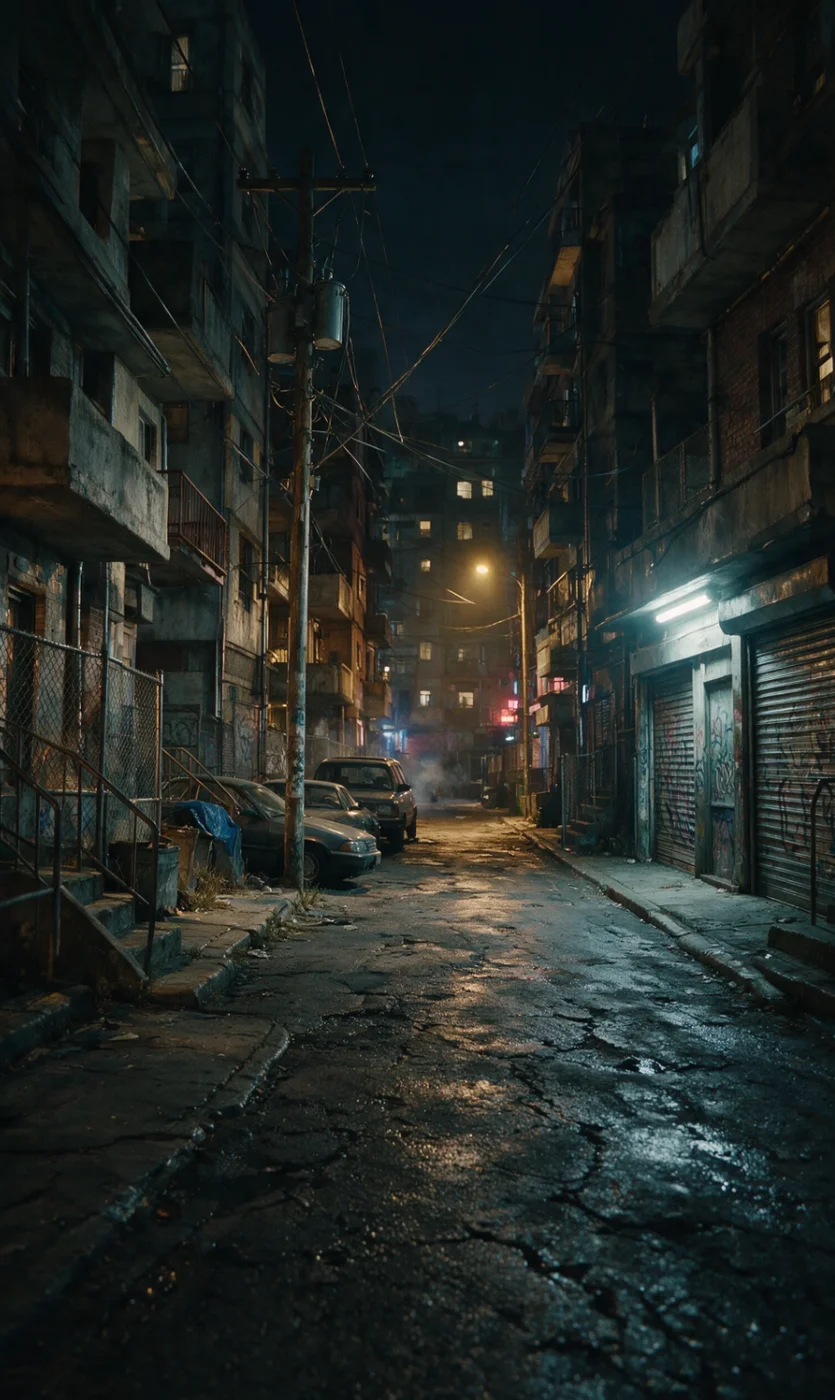
Location reference 1 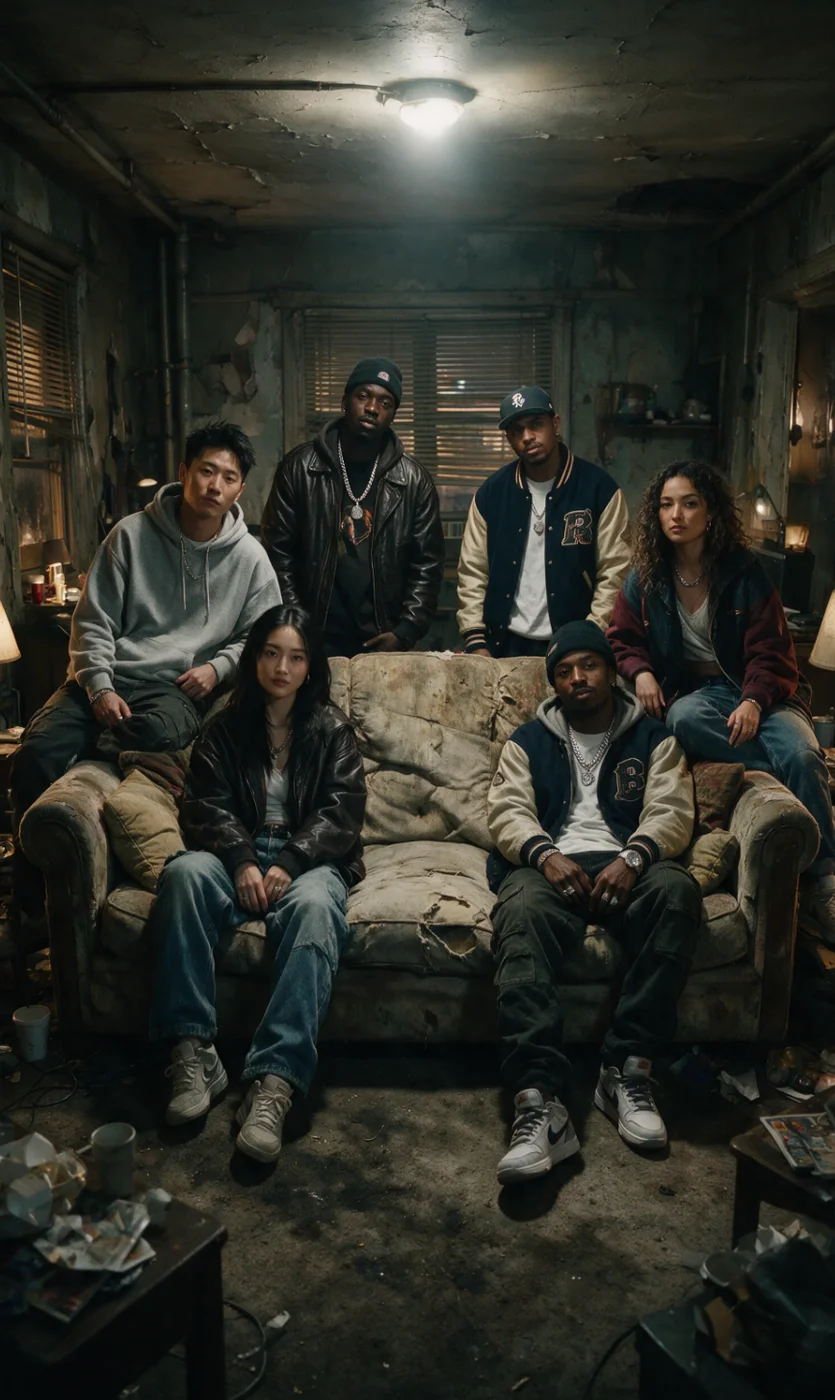
Location reference 2 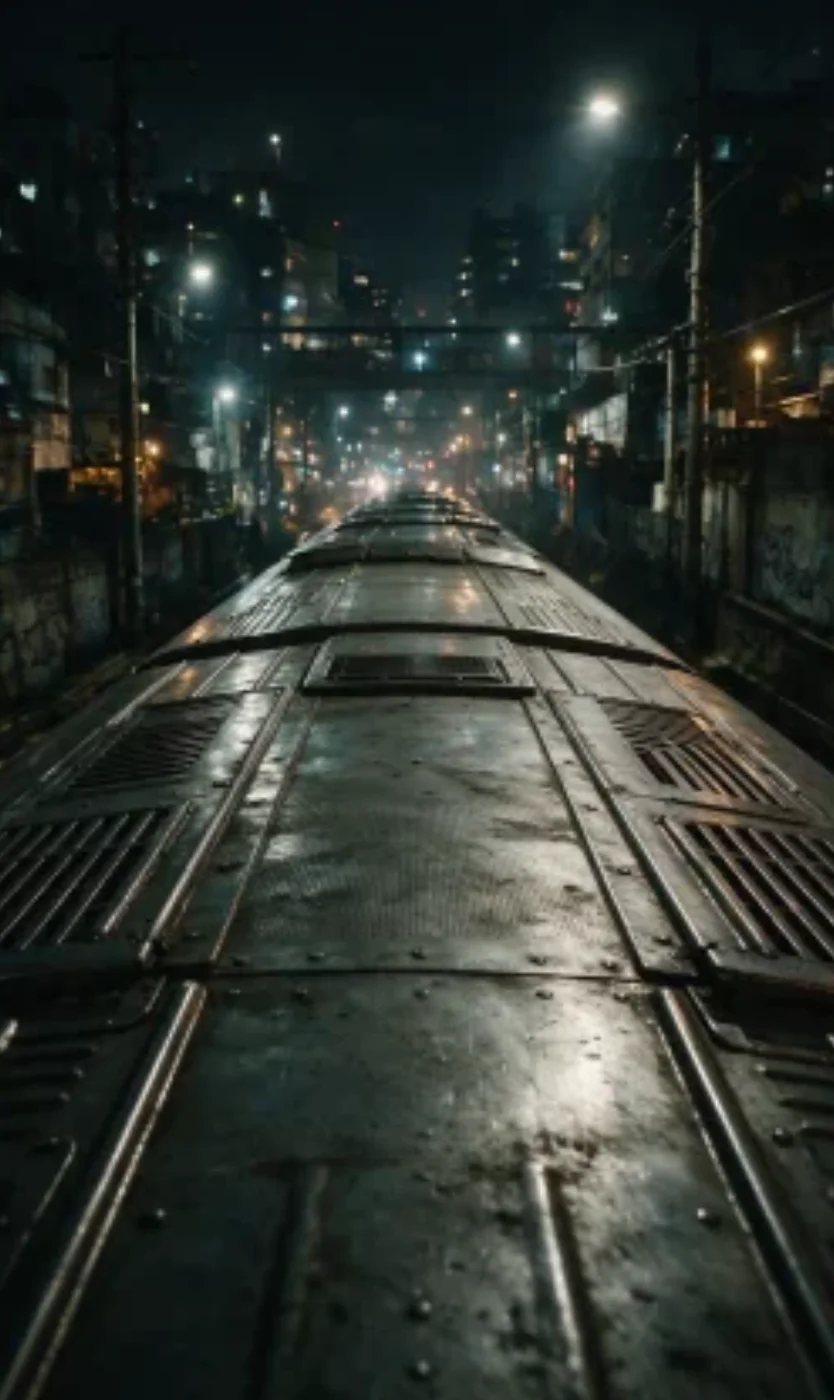
Location reference 3 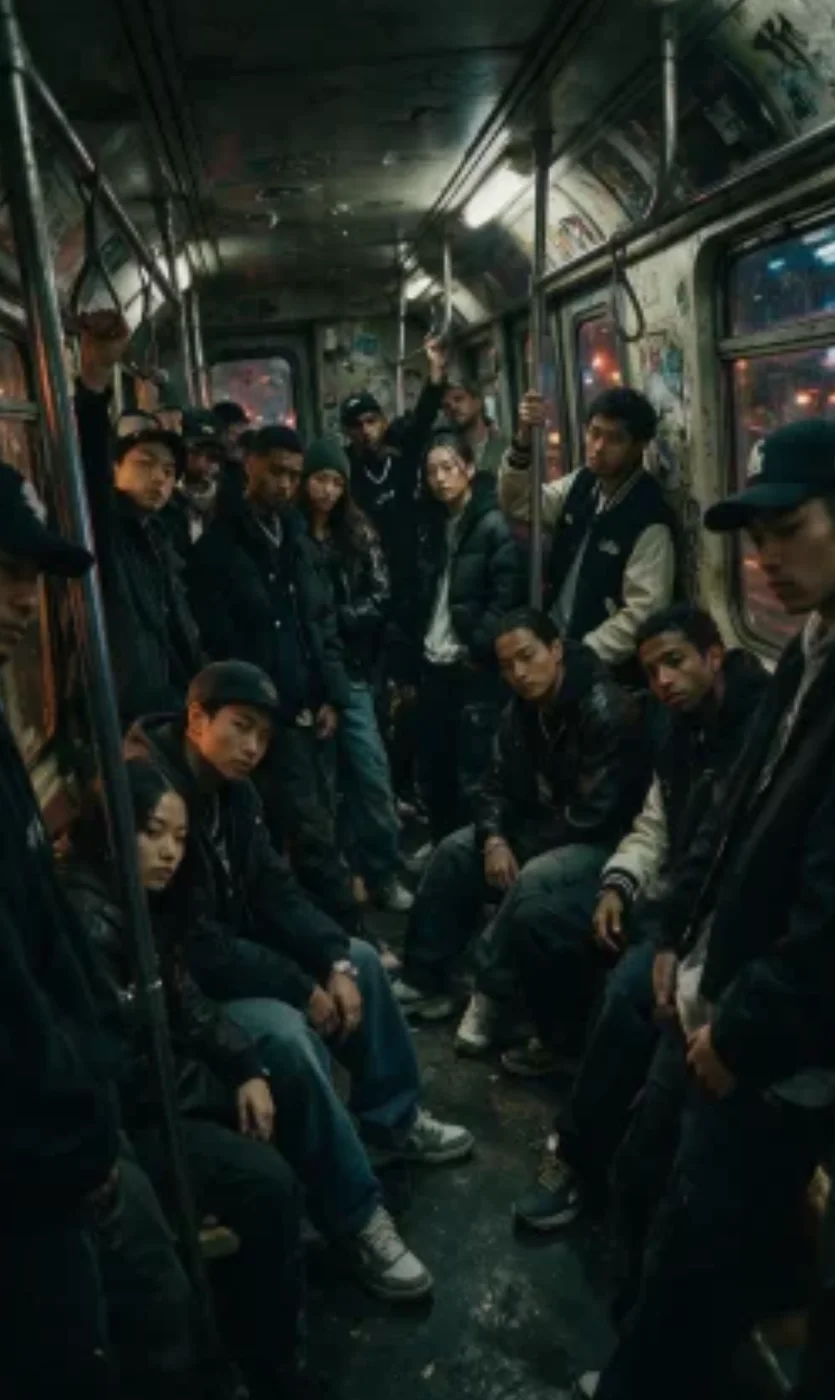
Location reference 4 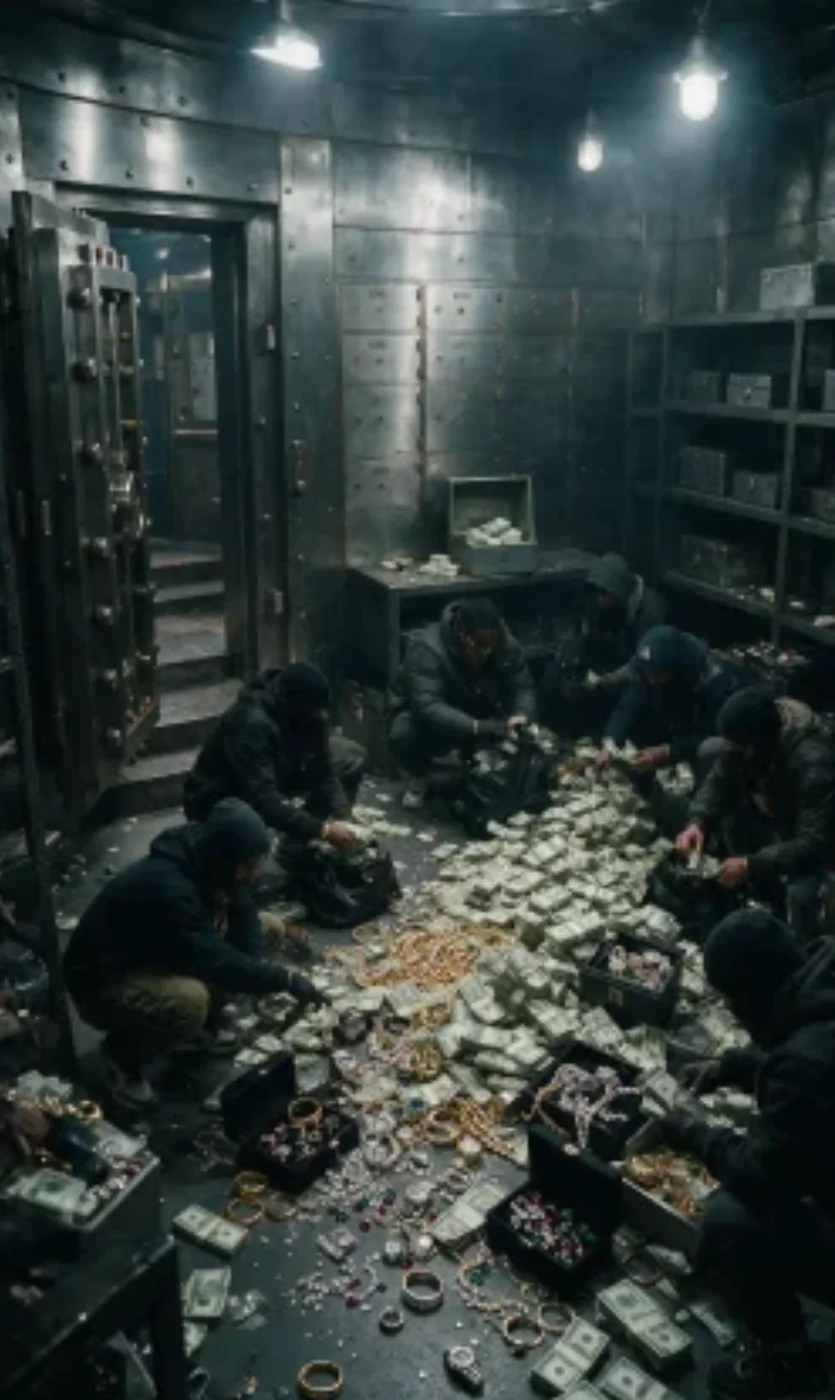
Location reference 5 - 04
Create the outfit references
Use the three outfit prompts separately and save the results.
Show copyable prompt
Image prompt 1 Photorealistic male streetwear outfit reference for a cinematic rap music video street scene. No human. No model. No person wearing the outfit. Show only the clothing and accessories as a clean fashion reference display, either arranged as a styled flat lay or presented on an invisible mannequin. The outfit should feel expensive, bold, street, and slightly vintage, suitable for a gritty urban street at night. Main outfit: oversized cream or off-white varsity jacket with deep forest-green sleeves and subtle aged leather texture heavyweight white ribbed tank top underneath loose faded light-blue baggy jeans with natural distressing and heavy stacking around the ankles dark brown or tan leather belt with gold hardware cream and green retro basketball sneakers thick gold Cuban chain second thinner gold necklace with a small pendant gold watch several chunky gold rings small gold stud earrings Use a rich but grounded color palette: cream, forest green, faded denim blue, tan leather, white, and warm gold. The clothing should feel slightly oversized and relaxed, with strong 2000s-inspired hip-hop influence mixed with modern luxury streetwear. Avoid looking too polished or preppy. The varsity jacket should have subtle wear, slightly faded edges, natural creases, and realistic leather texture. Jeans should look genuinely worn-in rather than artificially distressed. The overall vibe is confident, expensive, effortless, street-level rap artist styling with a strong silhouette and enough color to stand out against a dark urban environment. Real-life fashion photography. Photorealistic fabric textures. No background distractions.Image prompt 2 Photorealistic streetwear outfit reference for a cinematic rap music video train scene. No human. No model. No person wearing the outfit. Show only the clothing and accessories as a clean fashion reference display, either arranged as a styled flat lay or presented on an invisible mannequin. The outfit should feel bold, expensive, and street, with more color and personality instead of all black. Main outfit: oversized deep red heavyweight hoodie as the hero piece layered under a slightly oversized vintage black or faded charcoal leather jacket loose washed blue or grey baggy jeans with natural stacking and subtle distressing clean white or cream tank top peeking slightly under the hoodie white and red sneakers or cream and red retro basketball sneakers thick gold chain necklace additional thinner gold chain gold watch several gold rings optional red fitted cap or red beanie optional crossbody bag in black leather or red nylon Color palette should feel rich and stylish: deep red, faded blue, washed grey, black, cream, white, and gold accents. The overall vibe is modern rap artist streetwear, flashy but still believable, premium and effortless, gritty but fashionable, strong presence for a late-night train scene. Make the clothing look real and wearable: real fabric texture, natural folds, realistic leather grain, realistic denim texture, realistic gold jewelry reflections, slight wear and lived-in character, not showroom perfect. Shot like a real fashion product reference image. Clean composition. Focus clearly on the full outfit and accessories. Photorealistic. No background distraction.Image prompt 3 Photorealistic male outfit reference for a cinematic rap music video bank vault scene. No human. No model. No person wearing the outfit. Show only the clothing and accessories as a clean fashion reference display, either as a styled flat lay or on an invisible mannequin. The outfit should feel luxurious, dangerous, flashy, and expensive, suitable for a gritty bank vault filled with cash and jewelry. Main outfit: oversized deep burgundy or wine-red fur-trimmed leather jacket, rich texture but still streetwear rather than formal black heavyweight tank top underneath loose cream or stone-colored baggy trousers with subtle utility detailing black leather belt with gold hardware burgundy and cream retro sneakers thick gold Cuban chain layered gold necklaces with one large pendant heavy gold watch multiple gold rings gold bracelet optional dark burgundy fitted cap optional black leather gloves tucked into the waistband or displayed beside the outfit Color palette: deep burgundy, cream, black, warm gold, and small touches of dark brown. The contrast between the burgundy jacket, pale trousers, and heavy gold jewelry should make the outfit stand out strongly against cold steel vault walls. The styling should feel like a modern rap artist with expensive taste, but still grounded and believable. Avoid looking like a costume or casino performer. Realistic worn leather texture. Realistic fur texture. Natural fabric folds. Slightly lived-in trousers. Realistic polished gold reflections. Subtle imperfections and wear. Premium streetwear rather than formal luxury. Real-life fashion photography. Photorealistic materials. No background distractions. white background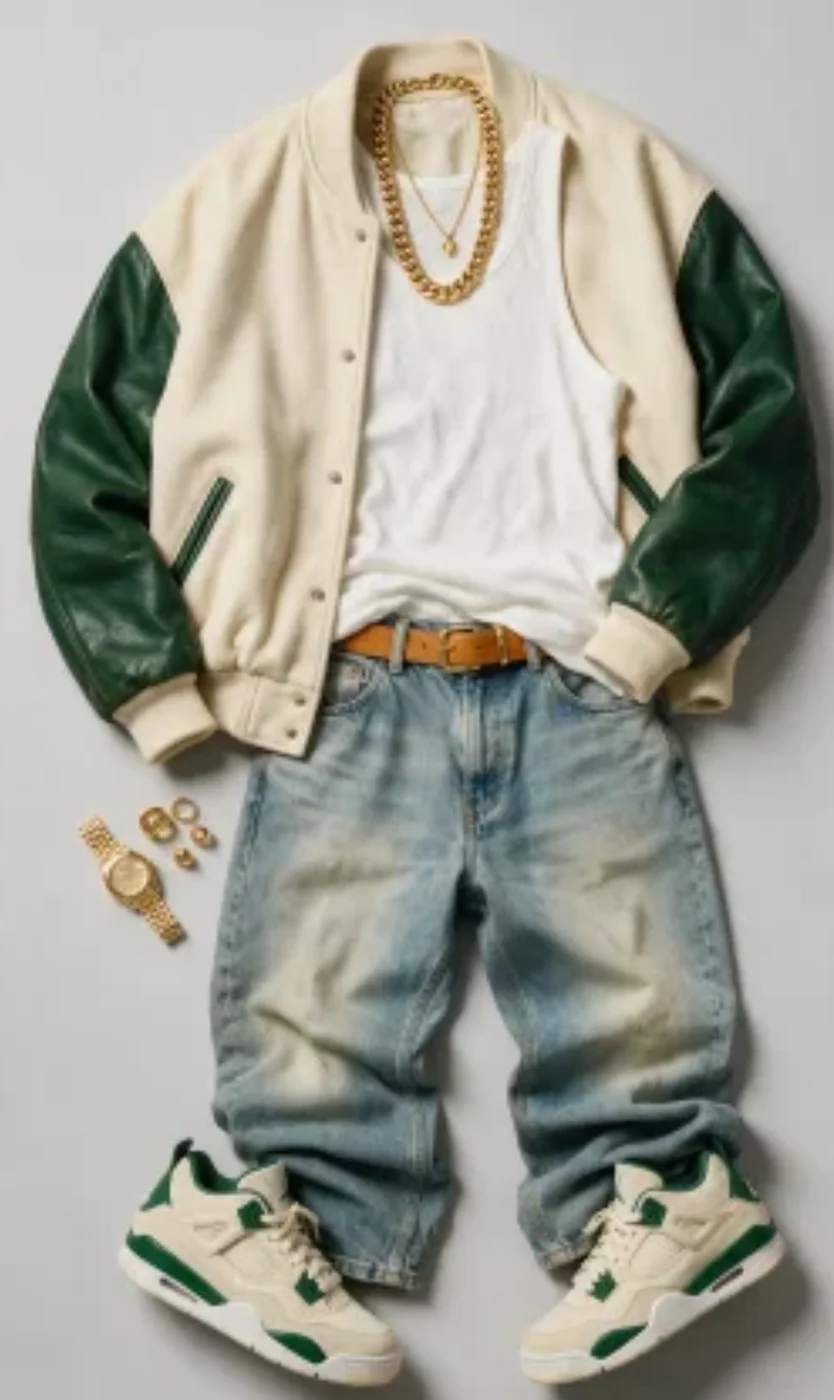
Outfit reference 1 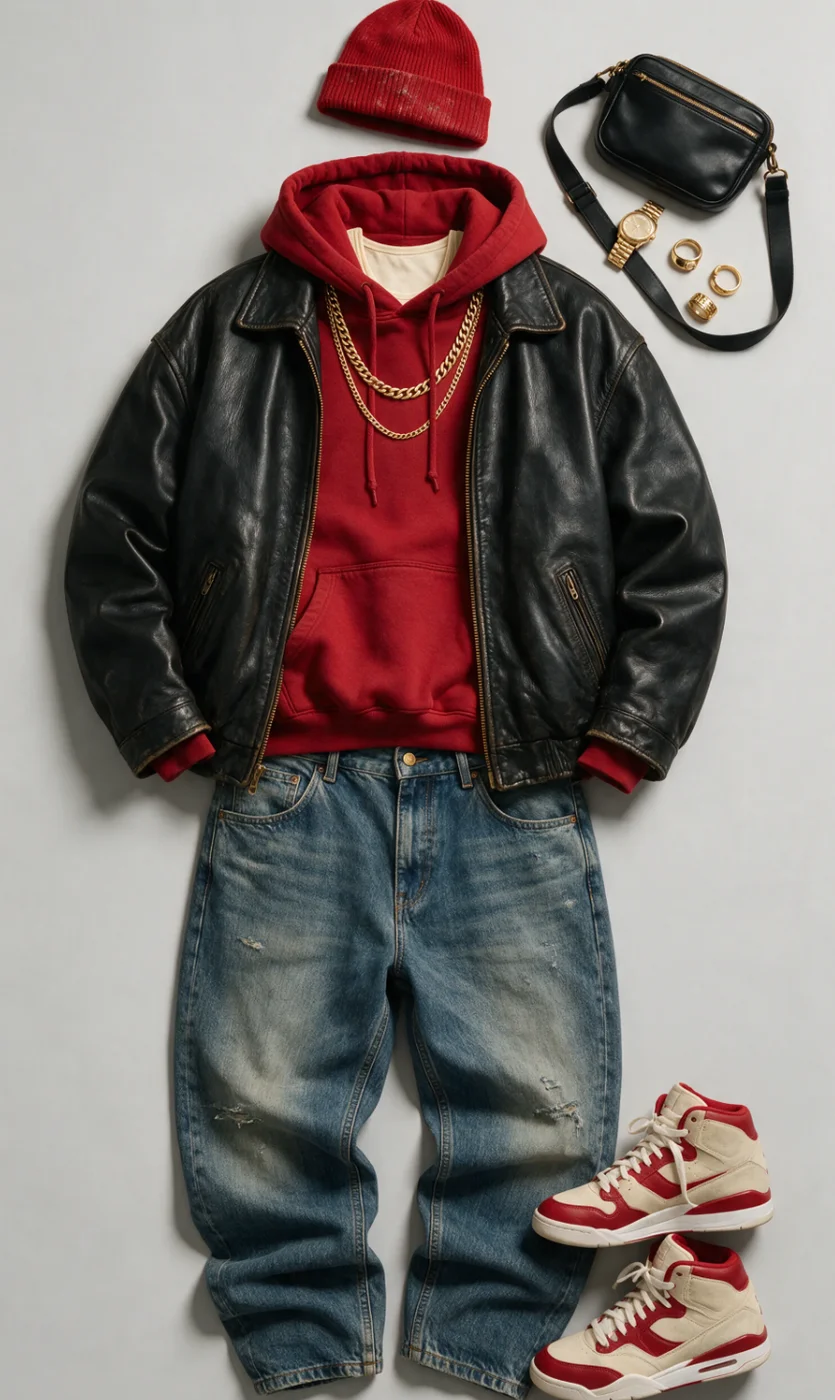
Outfit reference 2 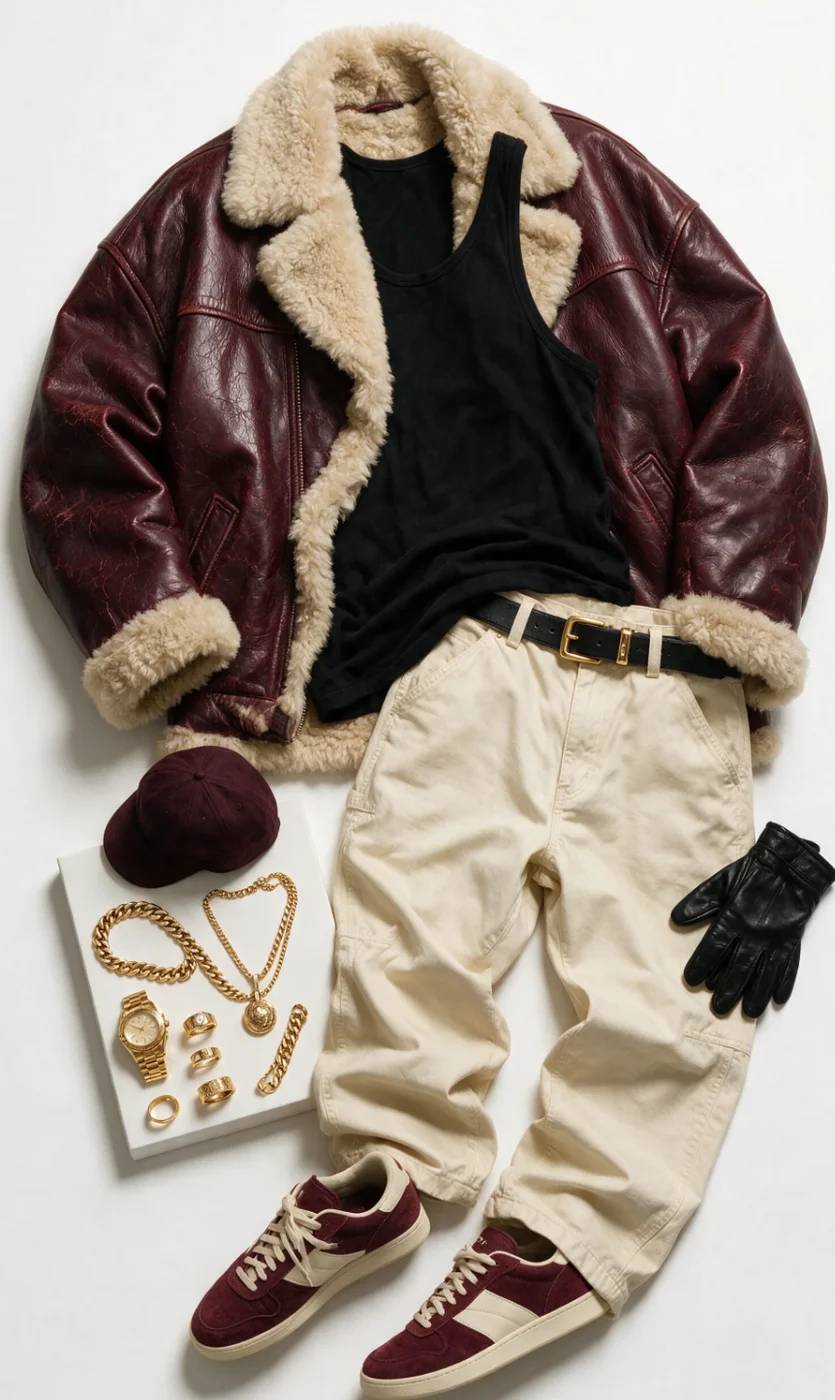
Outfit reference 3 - 05
Generate the music video
- Open Video and select Seedance 2.5.
- Upload your performance, location images, and outfit images. Paste the video prompt and tag each reference.
- Set the duration, aspect ratio, and resolution, then select Generate.
Show copyable prompt
Video prompt Use @[Video 1](video_1) as the ABSOLUTE MASTER for the main character’s identity, body movement, hand movement, gestures, poses, head movement, timing, camera movement, framing, camera distance, camera angle, perspective, pacing, shot progression, and overall performance. @[Image 1](image_1) is the BACKSTREET location reference: a gritty wet nighttime backstreet with cracked pavement, worn apartment façades, overhead electrical cables, shuttered storefronts, parked older cars, distant haze, practical streetlights, and wet reflections. @[Image 2](image_2) is the APARTMENT location reference: a dirty cramped apartment with peeling walls, exposed pipes, old blinds, clutter, lamps, a worn stained sofa, and a mixed group gathered naturally around it. @[Image 3](image_3) is the TRAIN ROOF location reference: the wet metal roof of a moving urban train at night, with roof vents, seams, overhead electrical infrastructure, and a dense dark city beyond. @[Image 4](image_4) is the TRAIN CARRIAGE location reference: a gritty crowded train carriage with worn metal poles, overhead straps, dim fluorescent fixtures, grimy walls, dirty windows, and naturally seated and standing passengers. @[Image 5](image_5) is the VAULT location reference: a steel bank vault with a large open vault door, safety-deposit boxes, industrial overhead lights, atmospheric haze, scattered cash, gold jewelry, watches, and open jewelry boxes. @[Image 6](image_6) is OUTFIT ONE: a cream varsity jacket with dark-green leather sleeves, white ribbed tank top, loose faded-blue jeans, cream-and-green sneakers, gold chains, and gold accessories. @[Image 7](image_7) is OUTFIT TWO: a vintage black leather jacket over a deep-red hoodie, loose faded-blue jeans, red-and-cream sneakers, red beanie, and layered gold accessories. @[Image 8](image_8) is OUTFIT THREE: a dark-burgundy leather shearling jacket with cream fur lining, black tank top, loose cream trousers, burgundy-and-cream sneakers, burgundy cap, and heavy gold jewelry. Create a photorealistic 9:16 rap music video using @[Video 1](video_1) as the absolute motion and camera reference. This is a location replacement, wardrobe replacement, and rap lip-sync transformation. The most important rule is that the main character’s movement and the camera must follow @[Video 1](video_1) as closely as possible. Do not redesign the performance to suit the new environments. Preserve the exact body movement, hand movement, gesture timing, pose timing, posture changes, head movement, performance rhythm, screen placement, camera framing, camera distance, camera height, camera angle, camera movement, camera rotation, camera shake, perspective, shot scale, pacing, timing, and shot progression from @[Video 1](video_1). If @[Video 1](video_1) shows him sitting, preserve the same sitting motion. If @[Video 1](video_1) shows him squatting, preserve the same squat and gestures. If @[Video 1](video_1) shows him walking, preserve the same walking motion. If @[Video 1](video_1) shows him turning, pointing, moving his hands, or changing posture, preserve those exact movements. Do not invent extra movement because of the new environment. The replacement environments must adapt around the original performance. The location reference images are only visual references for architecture, materials, props, atmosphere, crowd styling, and overall design. Do not force their exact composition onto the video. The final framing must always follow @[Video 1](video_1). If a location reference is wide but @[Video 1](video_1) is a closer shot, rebuild that location from a closer angle. If the reference image is centered but @[Video 1](video_1) is off-center, rebuild the environment from the off-center perspective. If the reference image uses a different camera height or angle, ignore it and follow @[Video 1](video_1). @[Video 1](video_1) framing always takes priority over the reference-image framing. @[Video 1](video_1) camera motion always takes priority over the reference-image perspective. @[Video 1](video_1) body motion always takes priority over environment-specific acting. Keep exactly the same main performer throughout the entire video. Preserve his identity, facial structure, hairstyle, body proportions, skin texture, age, and facial features. Do not beautify him. Do not smooth his skin. Do not redesign his face. Do not allow identity drift between scenes. The main performer is visibly RAPPING throughout the entire video. This is on-camera rap performance, not voiceover. His mouth must visibly perform the lyrics. Allow realistic lower-face articulation, including lips opening and closing, accurate lip shapes, natural jaw movement, subtle cheek movement caused by speech, teeth when naturally visible, and tongue when naturally required. Do not change his body movement, head movement, or hand gestures to match the lyrics. The body still follows @[Video 1](video_1) exactly while the mouth clearly raps. When watched without audio, it should still be obvious that he is rapping. The rap style is high-energy modern dark trap at 112 BPM. Male rapper, low-to-mid register, confident, cocky, hype, punchy rhythmic delivery, strong bounce, slight natural rasp, clear pronunciation, energetic without screaming, not singing. From 0.0 to 2.4 seconds he raps: “Came from the dirt, now they scream my name” Clearly articulate every word. Strong emphasis on “dirt,” “scream,” and “name.” From 2.4 to 4.8 seconds he raps: “Whole squad with me, we don’t switch for fame” Strong emphasis on “squad,” “switch,” and “fame.” From 4.8 to 7.2 seconds he raps: “Train go shake, but I’m still on ten” Increase the vocal energy slightly. Strong emphasis on “train,” “shake,” and “ten.” From 7.2 to 9.6 seconds he raps: “Walk through the crowd, everybody look again” Use a slightly quicker flow while keeping every word understandable. His mouth should remain actively rapping throughout the entire line. From 9.6 to 12.9 seconds he raps: “Vault full of gold, tell ’em run that again” This is the strongest final delivery. Emphasize “vault,” “gold,” “run,” and “again.” Use a dark hype 112 BPM trap beat with heavy bouncing 808 bass, hard punchy kick, sharp dry snare, fast tight hi-hats, occasional hi-hat rolls, minimal dark synth textures, short distorted synth or brass accents, and subtle metallic percussion. Keep the main rap vocal clearly above the instrumental. Optional quiet background ad-libs such as “ayy,” “yeah,” and “woo” are allowed, but the main character should only lip-sync to the main rap vocal. The same rap vocal and instrumental continue seamlessly through all scene changes. Do NOT copy the original lighting from @[Video 1](video_1). Each scene must have its own lighting, and the performer must be relit so he matches the replacement environment perfectly. The character, clothing, background, props, and other people must look like they were all physically filmed together in the same location. For every scene, match the light direction, shadow direction, shadow softness, color temperature, ambient fill, exposure, contrast, highlight intensity, practical-light influence, reflected light, and environmental color spill. The performer should never look pasted onto the new background. 0.0 to 2.0 seconds: BACKSTREET with OUTFIT ONE. Replace the source environment with the gritty nighttime backstreet from @[Image 1](image_1). Use wet cracked pavement, worn apartment buildings, overhead electrical cables, shuttered storefronts, parked old cars, street clutter, distant haze, practical streetlights, and wet reflections. The main performer wears OUTFIT ONE from @[Image 6](image_6). Preserve his exact movement, gestures, screen placement, timing, framing, and camera movement from @[Video 1](video_1). Do not invent a new street performance. Build the backstreet around the original movement. Lighting should feel like a real nighttime street: dirty amber streetlights mixed with cooler ambient night fill, wet pavement reflecting practical lights, subtle storefront or vehicle light spill, natural shadows, and realistic skin exposure. Relight the performer to match this street environment. 2.0 to 4.5 seconds: APARTMENT with OUTFIT ONE. Replace the environment with the dirty apartment from @[Image 2](image_2). Use peeling walls, cracked surfaces, exposed pipes, old blinds, clutter, cheap furniture, practical lamps, and the worn stained sofa. Place the performer naturally in the center of the sofa according to his source pose and motion. Add a mixed group of homies around him. Some can be seated, some leaning nearby, and some standing behind the sofa. Their behavior should feel natural and unscripted. They can subtly nod or give occasional restrained side-eyes toward the camera. Do not make them synchronized backup dancers. Keep the main performer unobstructed. Preserve his exact seated motion, hand gestures, framing, camera movement, and timing from @[Video 1](video_1). Do not invent new arm interactions unless the source motion already supports them. Lighting should feel like a real dirty apartment: dim practical lighting, one stronger overhead or nearby source around the sofa, warm lamp spill mixed with cooler weak window light, and deep shadows in the corners. Relight the performer and homies so everyone shares the same apartment lighting. 4.5 to 8.0 seconds: TRAIN ROOF with OUTFIT TWO. Replace the environment with the moving train roof from @[Image 3](image_3). The performer is physically grounded on a wet metal train roof at night. Use realistic roof panels, metal seams, vents, overhead electrical infrastructure, passing buildings, dense city surroundings, fast-moving lights, and realistic motion blur. The main performer wears OUTFIT TWO from @[Image 7](image_7). Keep his exact source squat, gestures, hand movement, body movement, timing, framing, and camera motion. Do not invent balancing actions. Do not create rooftop stunt choreography. The train and environment move around his original performance. The train roof can vibrate and shake beneath him. His jacket, hoodie, and loose clothing can react naturally to the wind, but do not alter his original body trajectory. His feet and body must remain convincingly grounded. Lighting should feel like a real train roof at night: cold ambient city light, passing streetlights and infrastructure creating moving highlights across his face and clothing, occasional warmer city light, realistic reflections from the wet metal roof, and believable nighttime exposure. Relight the performer completely to match this environment. 8.0 to 10.0 seconds: TRAIN CARRIAGE with OUTFIT TWO. Replace the environment with the gritty crowded train carriage from @[Image 4](image_4). Use worn metal poles, overhead straps, dirty windows, scratched surfaces, grimy walls, dim fluorescent fixtures, and natural train vibration. The main performer remains in OUTFIT TWO. Add a dense mixed crowd of passengers. Some are seated. Some are standing. Some hold overhead straps. Some grip poles. Some lean against doors. Some are partially blocked by foreground passengers. Most should behave naturally as train passengers. Several can subtly notice the performer or camera and give brief cold side-eyes. No synchronized posing. No dancing. Preserve the main performer’s exact source motion, screen position, framing, and camera movement. Do not invent a new walk through the carriage. Build the train interior around the source motion. Lighting should feel like a worn real train interior: harsh cold fluorescent ceiling lighting, slightly green-white practical tone, uneven illumination across faces, deep shadows beneath brows and clothing folds, occasional moving city light through the windows, and realistic highlights on metal poles and jewelry. Relight the performer and passengers so everyone shares the same train lighting. 10.0 to 12.0 seconds: VAULT with OUTFIT THREE. Replace the environment with the bank vault from @[Image 5](image_5). Use heavy steel vault architecture, a large open vault door, safety-deposit boxes, industrial overhead lighting, dark metallic surfaces, atmospheric haze, scattered cash, gold chains, watches, bracelets, jewelry, and open jewelry boxes. The main performer wears OUTFIT THREE from @[Image 8](image_8). Add several masked crew members in the background and midground. Some can be crouching, kneeling, sorting cash, filling bags, or handling jewelry. Their actions should feel candid and natural. They remain secondary to the main performer. Preserve his exact source movement, gestures, framing, placement, timing, and camera motion. Do not invent new cash interactions for him. Lighting should feel like a real industrial vault: cold overhead white light, hard metallic shadows, realistic reflections from steel, watches, and jewelry, subtle warm gold bounce from the valuables, and restrained atmospheric haze. Relight the performer’s face, burgundy outfit, and jewelry to match the vault perfectly. From 12.0 seconds to the end, preserve the source-video performance and camera behavior. Continue the final rap articulation according to the lyric timing. Do not invent a new ending or new camera movement. WARDROBE RULES: OUTFIT ONE only from 0.0 to 4.5 seconds. OUTFIT TWO only from 4.5 to 10.0 seconds. OUTFIT THREE only from 10.0 seconds onward. Do not blend wardrobes between scenes. Do not create hybrid outfits. Do not randomly change accessories. Preserve the same body proportions through every outfit transformation. The final video must look like real live-action footage captured on a modern high-end iPhone. Preserve the framing, perspective, and camera motion from @[Video 1](video_1). Add subtle realistic iPhone characteristics: natural computational sharpness, realistic digital sensor noise in dark areas, fine subtle grain, light compression texture, realistic highlight roll-off, realistic skin pores, natural motion blur, slight rolling-shutter character during faster movement, slight exposure breathing around practical lights, and believable handheld imperfections already compatible with the source. Do not make it too polished. Do not make it look like a studio commercial. Do not make it look like CGI. Do not add excessive grain. Do not add vintage film scratches. Do not make it VHS. The result should feel like a high-budget rap music video captured in real locations on a modern iPhone. Real skin. Real pores. Real fabric. Real metal. Real wet pavement. Real grime. Real reflections. Natural imperfections. ABSOLUTE RULES: Do not change the performer’s source body movement. Do not change his hand movement. Do not change his gesture timing. Do not change his head trajectory. Do not add body choreography. Do not add new rapper gestures. Do not change @[Video 1](video_1) camera movement. Do not change camera framing. Do not change camera distance. Do not zoom in. Do not zoom out. Do not recompose. Do not stabilize the source camera. Do not create new camera movement. Do not force the composition of @[Image 1](image_1) to @[Image 5](image_5) onto the video. Do not alter the main performer’s identity. Do not beautify him. Do not smooth his skin. Do not duplicate him. Do not weaken the rap lip sync. Do not make the rap voiceover. Do not make him appear silent. Do not preserve the original lighting when it conflicts with the new environment. Always relight the performer so he belongs naturally in each scene. Do not create cartoon visuals. Do not create illustration. Do not create glossy CGI textures. Do not create plastic skin. Do not add subtitles. Do not add text. Do not add logos. FINAL PRIORITY: Follow @[Video 1](video_1) framing and camera motion exactly. Follow @[Video 1](video_1) body movement, gestures, poses, and timing exactly. Preserve the main character’s identity. Make him clearly and visibly rap the supplied lyrics. Relight him naturally to match each replacement scene. Use the correct location for each time window. Use the correct outfit for each time window. Add natural background characters and props. Add subtle realistic iPhone texture and grain. If any location reference conflicts with @[Video 1](video_1), always preserve @[Video 1](video_1)’s motion and framing. The final result should feel like the exact same original performance and exact same camera choreography were physically filmed in these five real locations, with the performer naturally lit to match each environment and visibly rapping throughout. 9:16 vertical. Keep the exact source-video duration. Please follow the camera motion and framing from @[Video 1](video_1)
Select Seedance 2.5 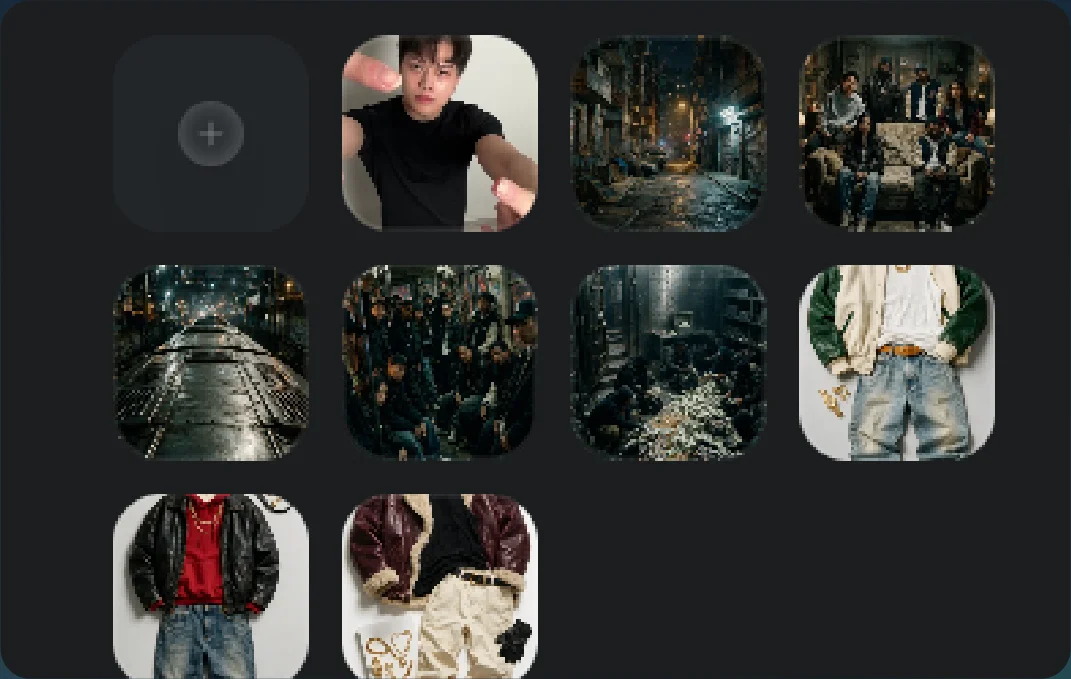
Uploaded location and outfit references 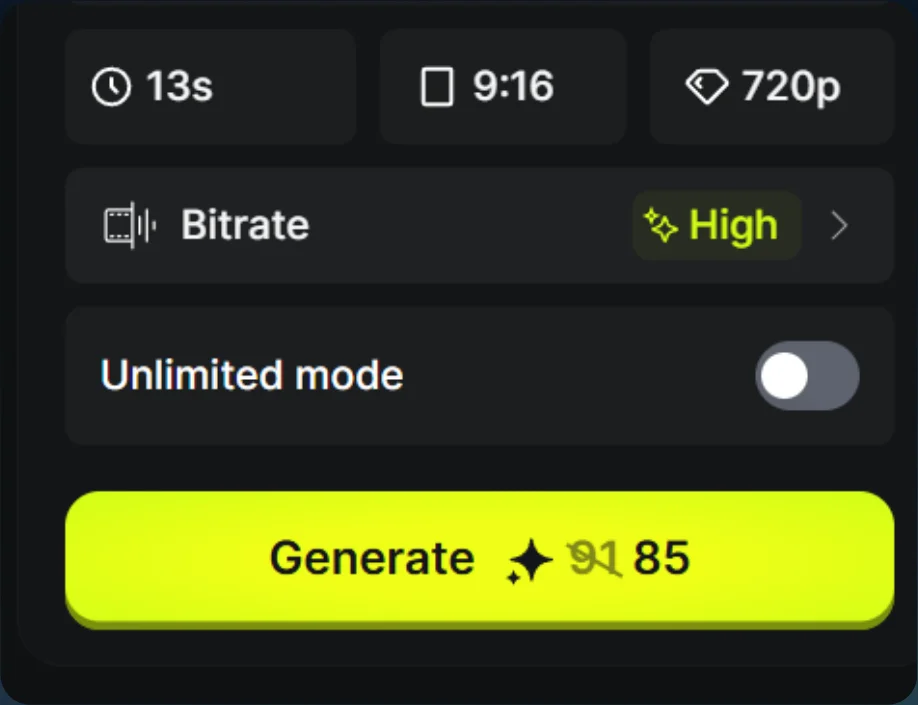
Generation settings 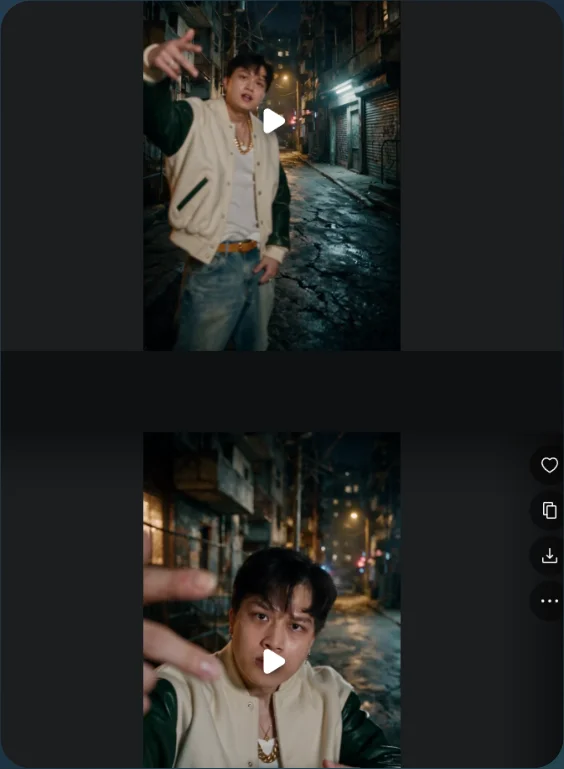
Music-video result